
A slope percentage calculator determines the grade of a slope using the formula: Slope Percentage = (Rise / Run) × 100. To use it, you enter the vertical distance (the rise) and the horizontal distance (the run) of an incline to instantly calculate its steepness as a percentage.
Whether you’re tackling a DIY landscaping project, designing a ramp, or just trying to understand the grade of a road, knowing how to calculate slopes is a key skill. Understanding the incline of a surface is crucial for safety, function, and appearance. But doing the math for a slope’s percentage by hand can be slow and lead to errors, especially when you need your numbers to be exact.
That’s where elearnsmart.com steps in. We believe complex math shouldn’t stand in your way. Our collection of over 100 professional calculators is designed to simplify tough problems for many academic and practical tasks, all for free. Among these tools is our dedicated slope percentage calculator. This powerful online slope calculator is built to give you instant, accurate results from just a little information.
This article will guide you through everything you need to know about calculating slope percentages. You’ll learn how to use our free tool, understand the formula behind it, see what different percentages mean, and even find out how to convert between other slope measurements. Ready to master slopes with ease? Let’s show you how simple it is to begin.
How Do You Use the Online Slope Percentage Calculator?

Knowing how to find a slope’s percentage is important in many fields. Our free online slope percentage calculator makes this job easy. You get fast, correct answers every time. This helpful tool is one of over 100 professional calculators and AI tutors from eLearnSmart, and they are all free to use.
Calculating slope by hand can be slow and lead to mistakes. Our slope percentage calculator solves these problems. With its simple design, you can quickly find the slope for any need. This helps make sure your projects are accurate.
How to Use Our Online Slope Percentage Calculator
Using our online slope calculator is easy. Just follow these simple steps to get your answer:
- Go to the Calculator: Open the Slope Percentage Calculator page on eLearnSmart.
- Find Your Values: You will need two main numbers: ‘Rise’ (the vertical change) and ‘Run’ (the horizontal distance).
- Enter Your Numbers: Type the ‘Rise’ and ‘Run’ values into the correct boxes. Make sure to use the same units for both (like feet for both, or meters for both).
- Use an Angle (Optional): If you don’t have Rise and Run, you can use an angle instead. Just enter the angle in degrees into the ‘Angle’ field.
- Calculate: Click the “Calculate” button. The tool will instantly show you the slope percentage.
- Read the Result: The result is the slope’s percentage. This number tells you how steep the slope is. A bigger percentage means a steeper slope.
We aim to make difficult math easy for everyone. Our tools are reliable for both students and professionals. Mistakes in slope calculations can cause serious construction problems or safety risks [1]. That’s why accuracy is so important.
Who Benefits from This Tool?
Many jobs require correct slope calculations. Our tool is helpful for a wide range of users:
- Civil Engineers: They design roads, bridges, and drainage systems. Accurate grades are essential.
- Construction Professionals: They need to ensure proper site grading. This prevents water pooling.
- Landscapers: They plan garden terraces and erosion control. Correct slopes are vital.
- Architects: They consider accessibility ramps and roof pitches. Precise percentages are required.
- Surveyors: They map terrain and measure elevation changes. This calculator saves time.
- Educators and Students: They learn and teach geometry, trigonometry, and engineering principles. It’s a great learning aid.
eLearnSmart offers this calculator and many others for free. Check out our full collection of over 100 professional calculators to help you master any subject with confidence.
How to calculate a slope percentage?
The Slope Percentage Formula Explained
Slope percentage is an important measure of steepness. It tells you how steep an incline or decline is, expressed as a percentage. While knowing the formula is helpful, our slope percentage calculator can do the math for you quickly.
The basic idea is “rise over run.” This simply means you divide the vertical height (the rise) by the horizontal length (the run). This calculation shows how much a surface goes up for a certain distance forward.
Here is the basic formula:
Slope Percentage = (Rise / Run) × 100
Let’s look at each part:
- Rise: This is the vertical distance, or how high something goes.
- Run: This is the horizontal distance, or how far something goes forward.
Keep these two points in mind for correct results:
- Units: Make sure the rise and run use the same units. If the rise is in feet, the run must also be in feet.
- Direction: A positive number means the slope goes up (an incline). A negative number means the slope goes down (a decline).
Doing this math by hand can be tricky. For instant and accurate results, try our online slope calculator. It handles complex numbers easily—just enter your values to get the answer.
A Step-by-Step Calculation Example
Let’s walk through an example. Imagine you’re building a wheelchair ramp and need to check if its slope meets safety rules.
Here are the measurements for our example:
- Rise: The ramp goes up 2 feet.
- Run: The ramp runs for 20 feet horizontally.
Follow these simple steps to find the slope percentage:
- Find the Rise and Run:
- Rise = 2 feet
- Run = 20 feet
- Use the Formula:
Remember the formula:
Slope Percentage = (Rise / Run) × 100Put in your values:
Slope Percentage = (2 feet / 20 feet) × 100 - Divide the Numbers:
Divide the rise by the run:
2 ÷ 20 = 0.1 - Multiply by 100:
Change the decimal to a percentage:
0.1 × 100 = 10 - Get the Final Result:
The slope of the ramp is 10%.
A 10% slope means the ramp rises 10 feet for every 100 feet it runs horizontally. While this calculation was easy with simple numbers, our online slope calculator is even faster. It works with any units and helps you save time and avoid mistakes. Use it to double-check your own calculations.
What Do Common Slope Percentages Mean?
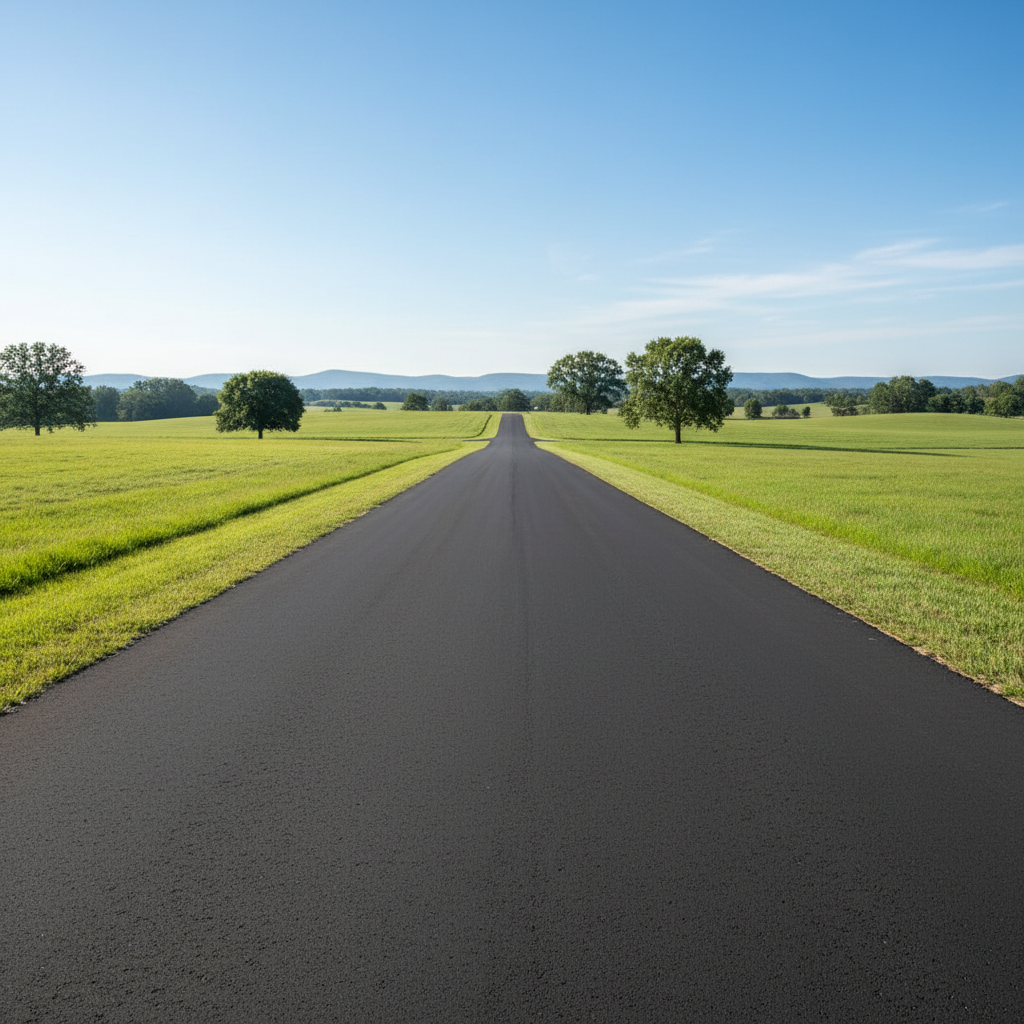
Understanding slope percentage is important for many jobs. People like civil engineers, architects, and landscapers use these values every day. Our slope percentage calculator makes these numbers easy to understand. It helps you see what different grades look like in the real world.
What is a 2% slope?
A 2% slope is very gentle. It means for every 100 units you move forward (horizontally), the height changes by 2 units (vertically). For example, over a distance of 100 feet, the ground would rise or fall by 2 feet. This slight incline is often hard to see.
A 2% slope is used in many common situations:
- Drainage: A minimum 2% slope is often recommended to drain water properly. This keeps water from forming puddles and damaging buildings [2].
- Accessibility Ramps: While official accessibility ramps have their own rules, a 2% slope is very easy to use on pathways. To compare, the maximum slope for an accessible ramp is 8.33% (1:12 ratio) [3]. That makes a 2% slope feel very comfortable.
- Roads and Pavements: Many roads have a slight grade to help with water runoff. This gentle slope gets the job done without affecting how cars drive.
Our online slope calculator lets you enter different distances and rises. You can see for yourself how a 2% slope looks over various lengths.
How steep is a 20% grade?
A 20% grade is a steep hill. For every 100 units you move forward, the height changes by 20 units. For example, if you go 100 meters forward, you also go up or down 20 meters. This slope is noticeably steep for anyone walking or driving.
Here’s what a 20% grade means in the real world:
- Challenging for Vehicles: Driving on a 20% grade is challenging. Most cars can handle it, but it puts extra strain on the engine and brakes. Trucks and other heavy vehicles may struggle, especially with a full load.
- Difficult for Pedestrians: Walking or cycling up a 20% slope is very hard work and will tire most people out quickly. Sidewalks and paths are rarely this steep for long.
- Mountainous Terrain: You will often find 20% grades on mountain roads or trails. These sections are usually short but difficult. It takes special engineering to make such steep roads safe [4].
- Specialized Applications: Some construction sites or factories might have 20% ramps. These are usually built only for specific, powerful equipment.
To really understand how steep a 20% grade is, use our free online slope calculator. It can help you change this percentage into degrees or a ratio, giving you a clearer picture for any project.
How Do You Convert Slope Percentage?
Slope percentage is a key measurement, but you often need to change it into other units. Converting it to degrees or a ratio makes it useful for different jobs. These conversions are important for everything from engineering to landscaping. Our slope percentage calculator at eLearnSmart makes these calculations fast and easy. It’s one of more than 100 free professional calculators we offer.
Converting Slope Percentage to Degrees
Changing a slope percentage into an angle in degrees is a common task. This gives you a precise way to measure steepness. It’s especially helpful in fields like engineering and architecture. The conversion relies on basic trigonometry.
The Formula for Degrees
To change slope percentage to degrees, you use a function called arctangent. First, turn the percentage into a decimal by dividing it by 100. Then, find the arctangent of that decimal.
Degrees = arctan(Slope Percentage / 100)
The arctangent function (shown as atan or tan⁻¹) is used to find an angle when you know its tangent [source: https://www.mathsisfun.com/algebra/trig-tan-function.html].
Using the eLearnSmart Calculator
Doing this math by hand can be slow. Our online slope calculator does it for you. Just enter the slope percentage, and the tool instantly gives you the angle in degrees. It’s accurate and saves you time.
Here’s how to convert a 20% slope to degrees:
- Change to a Decimal: Divide the percentage by 100. So, 20% becomes 0.20.
- Use Arctangent: Use the arctangent function. Degrees = arctan(0.20).
- Calculate: The answer is approximately 11.31 degrees.
So, a 20% slope is an angle of about 11.31 degrees. Our free slope percentage calculator does this math for you.
Converting Slope Percentage to Ratios
A slope ratio is another way to describe steepness. Ratios are common in construction and landscaping. A ratio compares the “rise” (vertical height) to the “run” (horizontal distance). For example, a 1:4 ratio means for every 1 unit you go up, you go 4 units across.
Understanding the Ratio Concept
Slope percentage is directly related to the rise-to-run ratio. A percentage is simply the “rise” for every 100 units of “run.” For example, a 10% slope means you have a rise of 10 for every 100 units of run. This gives you a 10:100 ratio.
The Formula for Ratios
Here’s how to turn a slope percentage into a simple rise:run ratio:
- Start with the Percentage: Let’s use a 25% slope.
- Create the First Ratio: This is a 25:100 ratio (rise:run).
- Simplify the Ratio: Divide both numbers by the largest number that fits into both. For 25 and 100, that number is 25.
- Final Ratio: This gives you a simple 1:4 ratio.
So, a 25% slope is the same as a 1:4 ratio. This means for every 1 unit of rise, there are 4 units of run [source: https://www.omnicalculator.com/construction/slope].
Ratio Conversion Made Easy
Our online slope calculator makes it easy to find the ratio. Enter the percentage, and it gives you the simplified ratio right away. This saves you from doing the math yourself. Use eLearnSmart’s 100+ free calculators to help with this and other conversions.
Visualizing Slope: The Slope Percentage Chart

Understanding Rise Over Run
Slope is easiest to understand with a simple idea: “rise over run.” This ratio tells you how steep something is. Think of it as a right-angled triangle.
- Rise is the vertical distance. It measures how much the height changes.
- Run is the horizontal distance. It indicates how far you go across.
Our online slope calculator uses the rise and run to find the slope percentage for you. Just enter the two measurements, and the tool does the math instantly. This makes it easy to see how the vertical rise and horizontal run are related. Understanding this helps you see how slope works on real-world roads, ramps, and landscapes.
Common Percentages in Construction and Landscaping
Slope percentages are very important for real-world projects. In construction and landscaping, the right slope ensures safety, good drainage, and that things work correctly. Our free slope calculator is a very useful tool for this. It helps professionals and homeowners find the correct slope for their project, which helps prevent costly errors.
Here are common slope percentages and their typical uses:
| Slope Percentage | Application | Notes |
|---|---|---|
| 1% – 2% | Minimum drainage for patios, driveways, flat roofs | Ensures water runoff and prevents pooling [5]. Essential for preventing property damage. |
| 2% – 5% | Gentle grades for pathways, large lawns, general landscaping | Comfortable for walking. Suitable for subtle elevation changes. |
| 5% – 8% | ADA compliant access ramps, residential driveways (gentle) | Maximum ADA ramp slope is 8.33% (1:12 ratio) [6]. Provides reasonable accessibility. |
| 8% – 15% | Steeper residential driveways, minor road grades | Common in hilly areas. Can be challenging for some vehicles in icy conditions. |
| 15% – 25%+ | Very steep driveways, mountain roads, specialized ramps | Requires careful design. You must consider which vehicles can use it. Extra grip is often needed on the surface. |
Knowing these common values is important for planning your project. Our online slope calculator can help you make sure you meet the right standards. Using a free and simple tool like this helps you make smart choices.
Frequently Asked Questions
How many degrees is a 3% slope?
A 3% slope is equal to about 1.72 degrees. This conversion uses a simple math function called the arctangent.
A 3% slope means a rise of 3 units for every 100 units of horizontal distance. The angle in degrees (θ) is found using the formula: θ = arctan(rise / run).
- First, change the percentage to a decimal: 3% = 0.03.
- Then, find the arctangent: arctan(0.03).
- The result is approximately 1.72 degrees.
Our eLearnSmart Slope Percentage Calculator handles this conversion for you instantly. It is one of over 100 free tools available on our platform.
What does a 3 to 1 slope mean in percent?
A 3-to-1 slope is very steep. This ratio means for every 1 unit of vertical rise, there are 3 units of horizontal run. To change this ratio to a percentage, you divide the rise by the run and multiply the result by 100.
Here is the simple calculation:
- Ratio: Rise : Run = 1 : 3
- Convert to a decimal: 1 / 3 = 0.3333…
- Multiply by 100 for the percentage: 0.3333… * 100 = 33.33%
So, a 1-to-3 slope (1 unit of rise for every 3 units of run) is a 33.33% grade. This measurement is often used in civil engineering and construction [source: Pennsylvania State University]. The eLearnSmart online slope calculator provides quick and accurate conversions for any ratio.
How much is a 1 percent slope in 10 feet?
A 1% slope over a 10-foot distance results in a rise of 0.1 feet. This is a key calculation in projects like landscaping and planning for drainage.
Let’s break down the math:
- A 1% slope means a rise of 1 unit for every 100 units of run.
- To find the rise over a certain distance, use the formula: Rise = (Slope Percentage / 100) * Run.
- In this case: Rise = (1 / 100) * 10 feet.
- This gives you: Rise = 0.01 * 10 feet = 0.1 feet.
For reference, 0.1 feet is equal to 1.2 inches. Our free online slope percentage calculator can quickly find the rise or run for any given slope, making precise measurements easy for everyone.
What is the difference between slope percentage and degrees?
Both slope percentage and degrees measure how steep a surface is. However, they use different scales and are common in different fields.
- Slope Percentage: This shows steepness as the ratio of vertical rise to horizontal run, multiplied by 100. For example, a 10% slope means a 10-foot rise for every 100 feet of horizontal distance. It is often used for roads, railways, and construction [source: Florida Department of Transportation].
- Degrees: This measures the angle of a slope compared to a flat, horizontal surface. The angle is given in degrees, from 0° (flat) to 90° (vertical). Engineers, surveyors, and scientists often use degrees.
While the two measurements are different, you can convert between them using math. Our versatile eLearnSmart online slope calculator makes these conversions simple and accurate. Explore our 100+ free calculator tools to help with your school and work needs.
Sources
- https://www.fhwa.dot.gov/engineering/geotech/pubs/05085/05085.pdf
- https://www.oregon.gov/ODOT/Construction/docs/Section00745.pdf
- https://www.ada.gov/law-and-regulations/design-standards/2010-ada-standards-for-accessible-design/
- https://www.fhwa.dot.gov/publications/research/safety/02081/ch5.cfm
- https://www.nachi.org/interpreting-grade-slopes-around-homes.htm
- https://www.ada.gov/law-and-regulations/building-codes/current-ada-standards-for-accessible-design/
